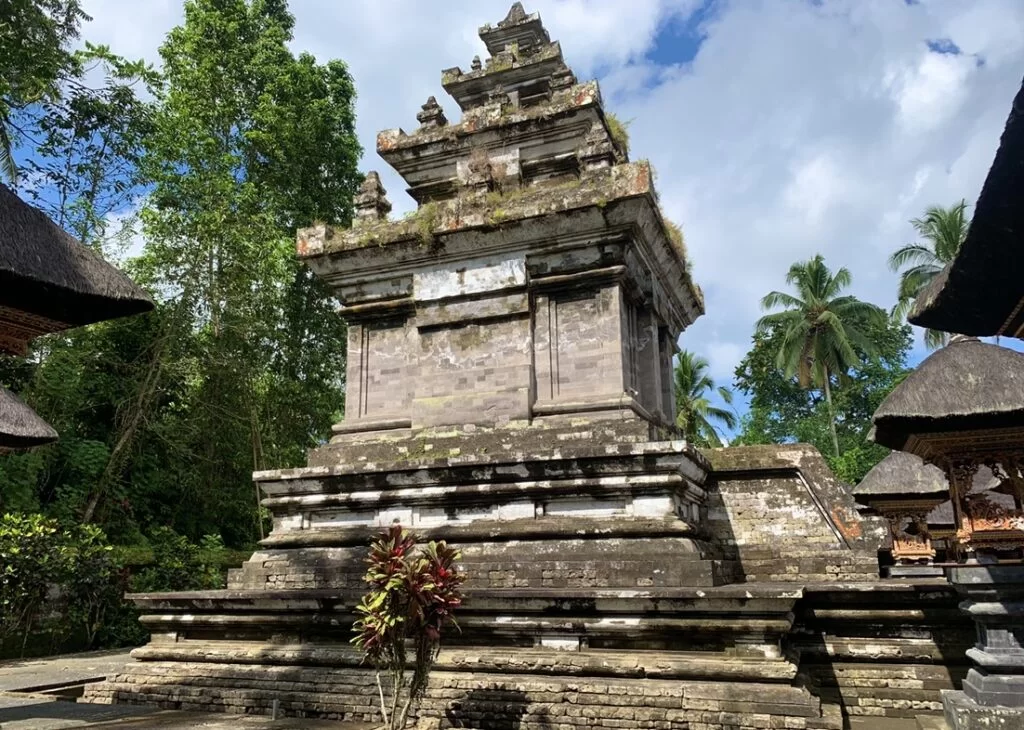
This temple is an ancient site from the reign of King Marakata in 1022 AD. Pura Mengening was first discovered by a
Dutch archaeologist, Willem Frederik Stutterheim in 1925 - 1927.
In 1980, historian A.J Bernet Kempers noted that Pura Mengening was a clear spring under a large tree. The spring was used to clean and bathe keris. This is also the origin of the name "mengening" which means "clear water".
In addition, there is a replica of a Javanese-style monument made of crushed stone blocks. This site is called Candi Mengening. The interior of the temple is inaccessible, but the original linga and yoni were found.
Based on Law No. 5 of 1985, Pura Mengening was selected as one of the cultural heritage sites from the many temples in Gianyar. This selection began with the discovery of a mound like a hill in the Pura Mengening area.